
Felzartamab for immunoglobulin A nephropathy
 Fact-checked by
What is felzartamab for IgAN?
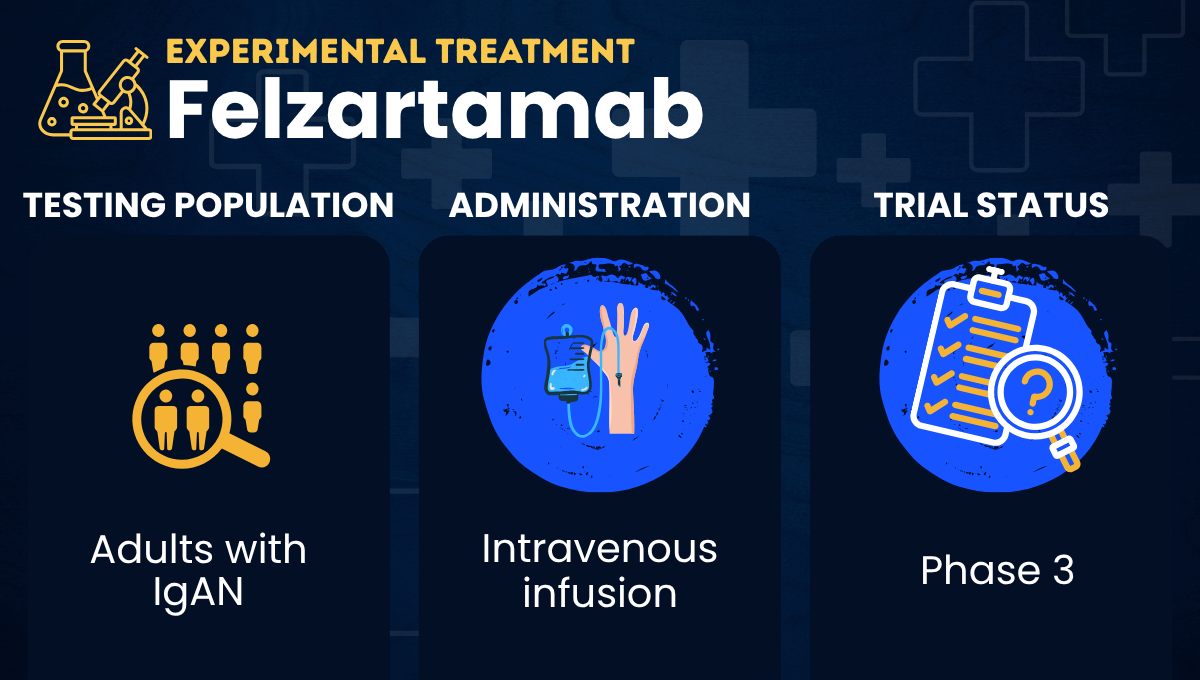
Felzartamab is an experimental antibody-based therapy currently in clinical trials for the treatment of immunoglobulin A nephropathy (IgAN).
In IgAN, immune cells called plasma cells are thought to produce an abnormal antibody called galactose-deficient IgA1 (Gd-IgA1), which then forms complexes that accumulate in the kidneys and cause inflammation. Over time, this accumulation can disrupt kidney function, leading to excessive protein in the urine (proteinuria) and other signs and symptoms of IgAN.
Felzartamab aims to deplete plasma cells, which researchers believe will subsequently reduce levels of Gd-IgA1 and help protect the kidneys. It contains an antibody that binds to CD38, a protein found on the surface of plasma cells, effectively marking the cells for destruction by the immune system.
Biogen, the company developing felzartamab, believes this unique mechanism of action may help reduce the incidence of some side effects associated with other therapies. The company is also testing felzartamab for other immune-related conditions, evaluating it in clinical trials as an intravenous formulation.
Therapy snapshot
| Treatment name | Felzartamab |
| Administration | Intravenous infusion |
| Clinical testing | Currently in Phase 3 testing for IgAN |
How will felzartamab be administered in IgAN?
In IgAN clinical trials, participants receive felzartamab via intravenous infusion at various dose levels. Researchers aim to establish a limited course of treatment with effects that persist long-term after treatment ends.
Felzartamab in IgAN clinical trials
Felzartamab is being tested in the ongoing Phase 3 PREVAIL trial (NCT06935357), which will enroll approximately 454 adults with IgAN. Participants will receive several doses of felzartamab or a placebo for 24 weeks (about six months), followed by an additional 1.5 years of monitoring.
The main goal is to measure changes in the urinary protein-to-creatinine ratio (UPCR), which assesses the severity of proteinuria after 36 weeks (about eight months). Estimated glomerular filtration rate (eGFR), a metric of how efficiently the kidneys filter blood, and other outcomes will also undergo evaluation after two years. The study is scheduled to conclude in 2029.
Data from the Phase 2 IGNAZ trial (NCT05065970) supported PREVAIL’s launch. In IGNAZ, adults with IgAN received one of three dosing regimens of felzartamab during the first six months, followed by a 1.5-year monitoring period. Results showed:
- The mean UPCR decreased with felzartamab compared with the placebo, with the benefits sustained for 1.5 years after treatment ended. The greatest benefits occurred in people who received the highest number of felzartamab doses.
- eGFR declined less over two years with felzartamab than with the placebo, reflecting a potential slowing of kidney function loss.
- Gd-IgA1 levels decreased by a median of 31.2% to 43.2% during felzartamab treatment, versus 6.8% in the placebo group. Levels gradually increased across all groups after treatment ended, but the increase was slowest in participants who received more treatment doses.
Felzartamab side effects
In IGNAZ, the most commonly reported side effects included:
- COVID-19
- infusion-related reaction
- fatigue
- headache
- the common cold
- diarrhea
- dizziness
- throat pain
- upper respiratory tract infection
IgA Nephropathy News is strictly a news and information website about the disease. It does not provide medical advice, diagnosis, or treatment. This content is not intended to be a substitute for professional medical advice, diagnosis, or treatment. Always seek the advice of your physician or other qualified health provider with any questions you may have regarding a medical condition. Never disregard professional medical advice or delay in seeking it because of something you have read on this website.