Tarpeyo (budesonide) for immunoglobulin A nephropathy
 Fact-checked by
What is Tarpeyo for immunoglobulin A nephropathy?
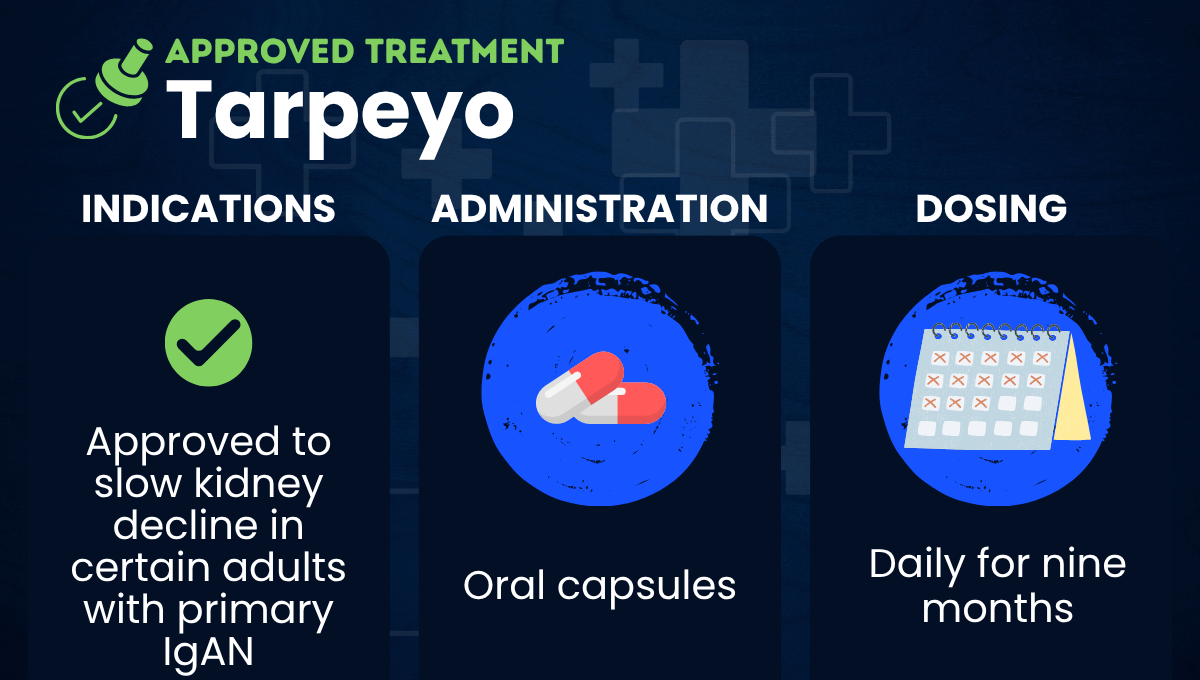
Tarpeyo (budesonide) is an approved oral therapy used to slow the loss of kidney function in adults with primary immunoglobulin A nephropathy (IgAN) who are at risk of disease progression.
In IgAN, the body produces an abnormal form of immunoglobulin A (IgA) antibodies called galactose-deficient IgA1 (Gd-IgA1). The immune system recognizes Gd-IgA1 as abnormal, and makes other antibodies to attach to them in the bloodstream. Some of the resulting immune complexes become trapped in the kidneys, driving inflammation and damage to the kidney’s filtering units.
Tarpeyo is designed to deliver the standard corticosteroid budesonide — an immune-suppressing medication — to an area of the gut where immune cells produce Gd-IgA1 antibodies. By suppressing these immune cells, the medication is expected to lower Gd-IgA1 production, in turn reducing the formation of the immune complexes that can cause kidney damage in IgAN.
Calliditas Therapeutics developed Tarpeyo and sells it in the U.S. The company also markets the medication under the brand name Kinpeygo in Europe.
| Brand name | Tarpeyo |
| Chemical name | Budesonide (delayed-release) |
| Usage | Used to slow the loss of kidney function in adults with primary IgAN |
| Administration | Oral capsules |
Who can take Tarpeyo?
In the U.S., Tarpeyo is approved to slow the loss of kidney function in adults with primary IgAN — a form of IgAN that isn’t related to another underlying condition — who are at risk of disease progression. The medication is similarly approved in the European Union.
Tarpeyo is contraindicated, or should not be used, in people who are allergic to Tarpeyo or any of its ingredients. It is also generally not recommended for people who:
- have severe liver impairment
- have certain active or uncontrolled systemic infections
- are using medications or substances that strongly inhibit the enzyme CYP3A4 (including the antifungal ketoconazole and grapefruit juice)
How is Tarpeyo administered?
Tarpeyo comes as delayed-release oral capsules. The recommended dosage is 16 mg (four capsules), taken once daily for nine months.
Patients should swallow Tarpeyo capsules whole without opening, crushing, or chewing them. The medication should be taken in the morning at least one hour before the first meal of the day.
Suddenly stopping Tarpeyo can cause side effects, including hormonal changes. When stopping treatment, the medication will be slowly tapered under medical guidance.

Tarpeyo in clinical trials
U.S. regulators approved Tarpeyo based on the results of the Phase 3 NefIgArd trial (NCT03643965), which included 364 adults with IgAN who were at risk of disease progression. They received Tarpeyo (16 mg) or a placebo on top of their ongoing blood pressure medications daily for nine months, after which they were followed off-treatment for an additional 15 months.
The researchers looked at changes in the urine protein-to-creatinine ratio (UPCR), which measures the amount of protein in urine, with excess amounts indicating kidney dysfunction. They also evaluated estimated glomerular filtration rate (eGFR), a blood test that estimates how efficiently the kidneys are filtering blood.
An interim analysis of the first 199 participants showed that after nine months, participants in the Tarpeyo group had a 27% lower UPCR than those in the placebo group, indicating significantly less protein in the urine. Final analyses of all trial participants showed that similar UPCR reductions were sustained for up to two years.
Final two-year analyses showed that people on Tarpeyo had significantly less eGFR decline than those on placebo, demonstrating the therapy’s ability to protect kidney function.
The ongoing Phase 3 NefXtend trial (NCT06712407) is testing the effectiveness and safety of a longer treatment period in participants who have already completed one nine-month cycle of Tarpeyo.
Tarpeyo side effects
The most common side effects of Tarpeyo in clinical trials included:
- swelling of the arms, legs, hands, feet, or face
- high blood pressure
- muscle spasms
- acne
- headache
- upper respiratory tract infection
- weight gain
- indigestion
- skin inflammation
- joint pain
- increased white blood cell count
Tarpeyo also comes with warnings about potentially serious side effects that can occur with corticosteroids for which patients will be carefully monitored. These include:
- excess amounts of the hormone cortisol when using the medication
- adrenal suppression, or a dangerous drop in cortisol, especially when stopping the medication
- immunosuppression, leading to an increased risk of serious infections and reduced efficacy of some vaccines
Corticosteroids can also have a range of other adverse effects for people with certain health conditions, including diabetes, high blood pressure, low bone density (osteoporosis), peptic ulcers, and certain eye issues (glaucoma, cataracts). Doctors may recommend additional monitoring for such individuals during Tarpeyo treatment.
The risk of cortisol imbalances, including adrenal suppression, is higher if the medication is suddenly stopped. That is why the treatment should be gradually tapered under medical supervision.
IgA Nephropathy News is strictly a news and information website about the disease. It does not provide medical advice, diagnosis, or treatment. This content is not intended to be a substitute for professional medical advice, diagnosis, or treatment. Always seek the advice of your physician or other qualified health provider with any questions you may have regarding a medical condition. Never disregard professional medical advice or delay in seeking it because of something you have read on this website.