
Filspari (sparsentan) for immunoglobulin A nephropathy
 Fact-checked by
What is Filspari for immunoglobulin A nephropathy?
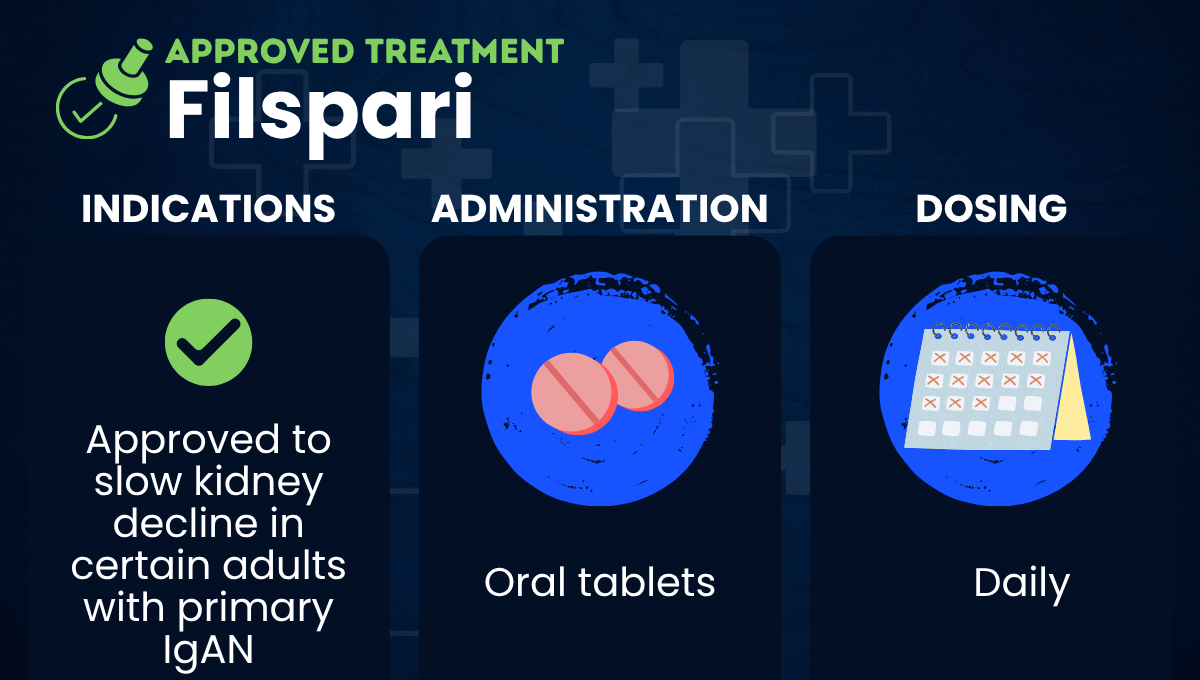
Filspari (sparsentan) is an approved oral therapy used to slow kidney function declines in adults with primary immunoglobulin A nephropathy (IgAN).
IgAN is an immune disease in which abnormal antibody complexes build up in the kidneys. This triggers a series of immune processes that can ultimately damage the kidneys and weaken their filtering capacity. Endothelin-1 and angiotensin II are two molecules that contribute to kidney inflammation and damage in IgAN.
Filspari aims to inhibit endothelin-1 and angiotensin II signaling by blocking the receptor proteins through which they exert their effects. This is expected to help control the harmful processes that drive IgAN, preserving kidney function. Unlike many other IgAN treatments, Filspari doesn’t suppress the immune system, which could help avoid immune-related side effects.
Filspari, taken as a once-daily oral tablet, is marketed by Travere Therapeutics in the U.S., where it is also approved to treat certain people with focal segmental glomerulosclerosis, another rare kidney disease. The medication is sold in the European Union (EU) by Vifor.
| Brand name | Filspari |
| Chemical name | Sparsentan |
| Usage | Used to slow the loss of kidney function in adults with primary IgAN |
| Administration | Oral tablets |
Who can take Filspari?
In the U.S., Filspari is approved to slow kidney function declines in adults with primary IgAN — a form of the disease where there is no known underlying cause — who are at risk of disease progression. It is similarly approved in the EU.
Filspari is contraindicated, or should not be used:
- during pregnancy
- alongside certain blood pressure medications, including angiotensin receptor blockers (ARBs), endothelin receptor antagonists (ERAs), or aliskiren (sold as Tekturna)
The prescribing information for Filspari carries a boxed warning that the medication could cause harm to a developing fetus, which is why it should not be taken during pregnancy. It also carries a boxed warning that it could cause liver toxicity and should generally be avoided by people with preexisting liver abnormalities. Filspari is only available through a Risk Evaluation and Mitigation Strategy program, which requires regular liver monitoring before and throughout treatment.
How is Filspari administered?
Filspari comes as oral tablets. The recommended starting dosage for people with IgAN is 200 mg once daily, increasing to 400 mg once daily after two weeks if side effects are tolerable.
Patients should swallow Filspari tablets whole with water before their morning or evening meal. However, if this is not possible, they can crush the tablets and mix the powder with water immediately before taking the medication.
Because of potential drug interactions, patients must stop taking certain IgAN medications, including ARBs and ERAs, before starting Filspari. Other medications may also need to be stopped or adjusted.

Filspari in clinical trials
The Phase 3 PROTECT trial (NCT03762850) supported Filspari’s U.S. approval for IgAN. It included 404 adults with IgAN who were at risk of progression to kidney failure despite stable doses of standard medications.
For more than two years, participants received daily doses of Filspari or the standard ARB irbesartan. Investigators measured the change in the urine protein-to-creatinine ratio (UPCR), which identifies excess protein in urine, a sign of kidney dysfunction. They also recorded participants’ estimated glomerular filtration rate (eGFR), which assesses how well the kidneys filter blood.
PROTECT results showed the following:
- After 36 weeks, there was a significantly greater mean percent reduction in UPCR for participants who received Filspari versus those who received irbesartan (-49.8% vs. -15.1%). The benefits were sustained for more than two years.
- Over the course of treatment, Filspari participants experienced a significantly slower decline in eGFR than irbesartan participants.
Filspari side effects
The most common side effects of Filspari in people with IgAN include:
- high blood potassium levels (hyperkalemia), which can cause complications such as muscle weakness and heart palpitations
- low blood pressure (hypotension), including when rising from a lying or sitting position
- swelling of the arms, hands, legs, or feet, which can be a sign of fluid retention
- dizziness
- low red blood cell counts (anemia)
- acute kidney injury
Doctors may recommend adjusting other medications, reducing the dosage of Filspari, or stopping Filspari if patients experience clinically significant low blood pressure, fluid retention, hyperkalemia, or kidney function decline.
The medication also carries two boxed warnings:
- Filspari may harm developing fetuses and should not be used during pregnancy.
- Some medications that block endothelin signaling can increase the risk of liver damage, including liver failure.
Pregnancy must be ruled out before Filspari is started for all people who can become pregnant. An effective means of contraception should be used before starting the therapy, throughout treatment, and for two weeks after stopping the medication. If pregnancy occurs, Filspari should be stopped as soon as possible.
Before starting Filspari and every three months during treatment, patients should have their liver enzymes tested. If liver enzyme levels rise, this may indicate liver damage and warrant temporary or permanent treatment interruption.
Several other medications can interact with Filspari. Some of these aren’t recommended for simultaneous use with Filspari, and others may affect dosage needs or monitoring requirements. Patients should always tell their doctors about all medications they take.
IgA Nephropathy News is strictly a news and information website about the disease. It does not provide medical advice, diagnosis, or treatment. This content is not intended to be a substitute for professional medical advice, diagnosis, or treatment. Always seek the advice of your physician or other qualified health provider with any questions you may have regarding a medical condition. Never disregard professional medical advice or delay in seeking it because of something you have read on this website.